Cavalier King Charles Spaniel
Physical Traits
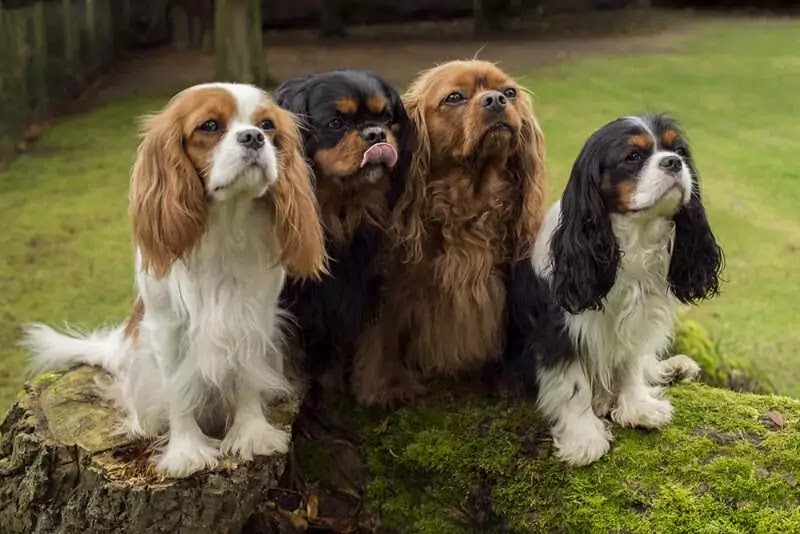
Historically the Cavalier King Charles Spaniel was a lap dog and is small for a spaniel, with fully grown adults comparable in size to adolescents of other larger spaniel breeds. The tail is usually not docked, and the Cavalier should have a silky coat of moderate length. Standards state that it should be free from curl, although a slight wave is allowed. Feathering can grow on their ears, feet, legs and tail in adulthood. Standards require this be kept long, with the feathering on the feet a particularly important aspect of the breed's features.
The Cavalier King Charles Spaniel and the English Toy Spaniel can often be confused with each other. In the United Kingdom, the English Toy Spaniel is called the King Charles Spaniel, while in the United States, one of the colours of the Toy Spaniel is known as King Charles. The two breeds share similar history and only diverged from each other about 100 years ago. There are several major differences between the two breeds, with the primary difference being size. While the Cavalier weighs on average between 13 to 18 pounds (5.9 to 8.2 kg), the King Charles is smaller at 9 to 15 pounds (4.1 to 6.8 kg). In addition, their facial features, while similar, are different; the Cavalier's ears are set higher and its skull is flat, while the King Charles's skull is domed. Finally, the muzzle length of the Cavalier tends to be longer than that of its King Charles cousin.
Color
The breed has four recognized colours.
Black and Tan
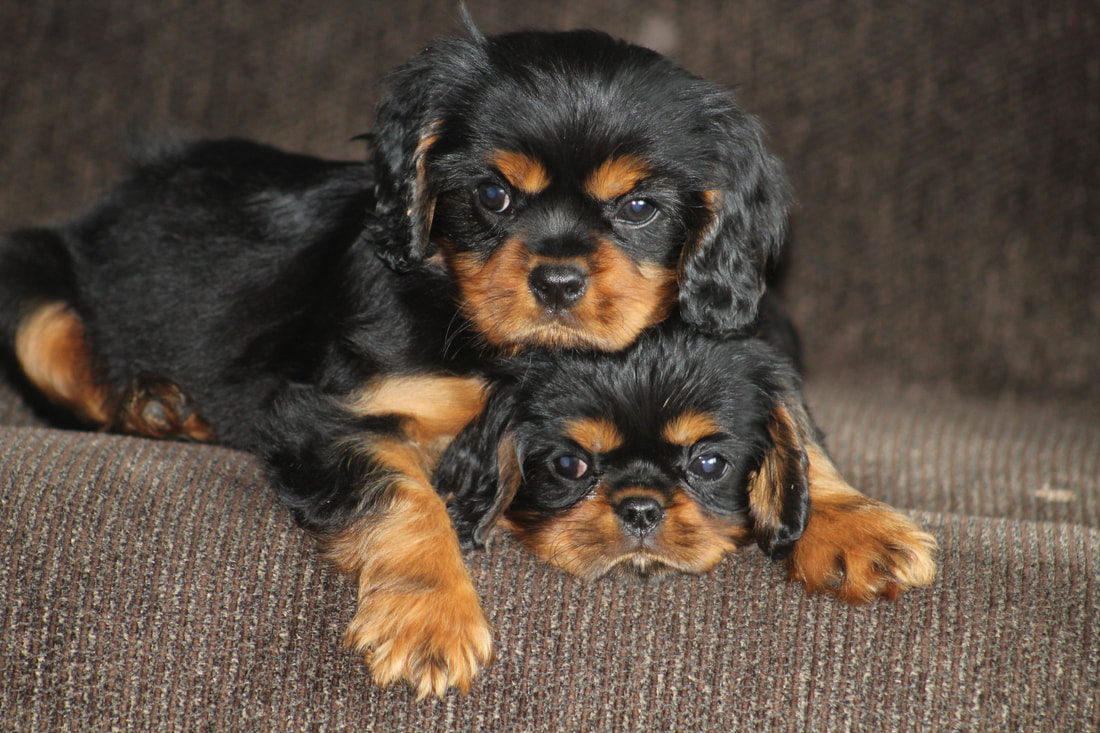
Black and Tan are dogs with black bodies with tan highlights, particularly eyebrows, cheeks, legs and beneath the tail. Black and Tan is referred to as "King Charles" in the King Charles Spaniel.
Ruby

Ruby Cavaliers should be entirely chestnut all over, although some can have some white in their coats that is considered a fault under American Kennel Club conformation show rules.
Tricolor
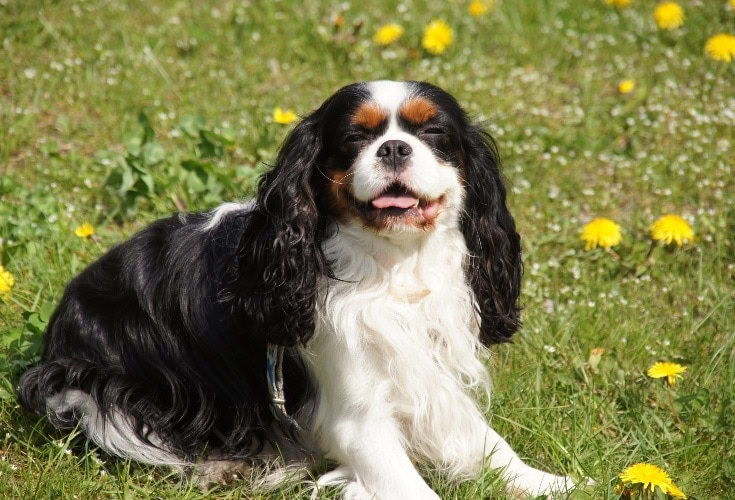
The fourth colour is known as Tricolour, which is black and white with tan markings on cheeks, inside ears, on eyebrows, inside legs, and on underside of tail. It is referred to as "Prince Charles" in the King Charles Spaniel.
Blenheim
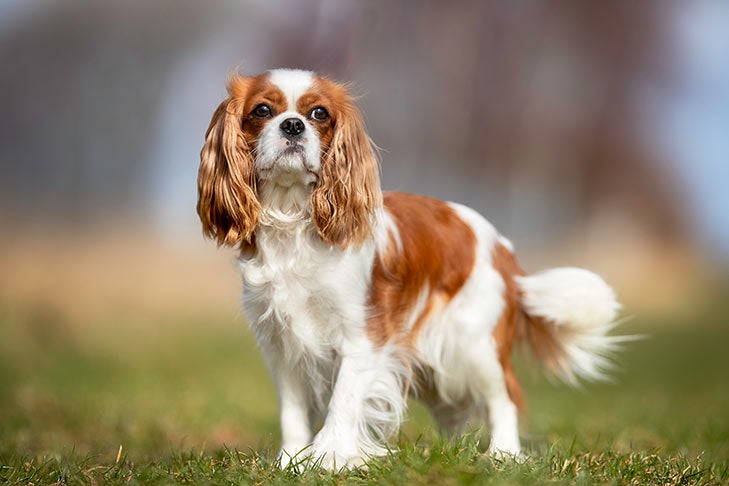
Cavaliers that have rich chestnut markings on a pearly white background are known as Blenheim in honor of Blenheim Palace, where John Churchill, 1st Duke of Marlborough raised for assistance in hunting the predecessors to the Cavalier breed in this particular colour. In some Blenheim dogs there is a chestnut spot in the middle of the forehead: this is called the "Blenheim" spot. The Blenheim spot is also known as the mark of the "Duchess Thumb Print", based on the legend that Sarah Churchill, Duchess of Marlborough while awaiting news of her husband's safe return from the Battle of Blenheim, pressed the head of an expecting dam with her thumb, resulting in five puppies bearing the lucky mark after news that the battle had been won.